







 Search
 +371 6727 1803

You already have everything you need to reduce fuel costs – you just have to know how to apply it.
The way vehicles are prepared and driven has a direct impact on consumption. With the right focus points, small changes in everyday habits can lead to meaningful savings.
With the help of experienced instructors at Drošas Braukšanas Skola (Safe Driving School) we’ve created a practical checklist to help your team become more efficient with every drive.
1. Before the drive
If the vehicle isn’t properly prepared, higher fuel consumption starts from the very first kilometer.
Tyre pressure
Low tyre pressure increases rolling resistance, fuel consumption, and tyre wear. Rule of thumb – check at least every 2 weeks.
If you switch trailers regularly, always check each trailer's tyres before driving, as their condition may vary.
Pay special attention to dual tyres: one underinflated tyre can go unnoticed (especially without load), while the other carries the weight, leading to higher consumption and uneven wear.
Load distribution
Uneven weight creates additional strain and affects handling: too much weight in front reduces traction, too much in the rear affects steering control.
Axle load
Overloading a single axle increases resistance, fuel consumption, and component wear.
2. Driving habits
Fuel consumption is largely determined by how you use the engine, not just how fast you go.
Engine RPM (green zone)
Trucks are designed to operate most efficiently in the torque range (typically 1000-1500 rpm). Higher RPM increases fuel consumption, but doesn’t significantly improve pulling power in normal conditions.
Heavy load behavior
A loaded truck will naturally be slower. Trying to maintain the same dynamics as an empty vehicle by increasing RPM only wastes fuel.
3. Using the vehicle’s capabilities
Modern trucks are built to support efficient driving – if their systems are used correctly.
Cruise control
In newer vehicles (last 3–5 years), cruise control manages acceleration and RPM more precisely than most drivers can.
Predictive systems
Systems that use terrain data can prepare the vehicle for hills and descents by accelerating or coasting at the right time.
Manual override
Frequent manual adjustments often lead to inconsistent driving and higher fuel consumption.
4. Reading the road
Efficient driving depends on anticipation, not reaction.
Early reaction
The earlier you adjust to traffic or terrain, the less you need to brake and accelerate.
Hills and descents
Use terrain to your advantage – build speed before climbs and use momentum on descents.
Traffic flow
Maintaining a steady pace reduces unnecessary fuel consumption.
5. Use movement
Not all movement requires fuel. Using inertia correctly can significantly reduce consumption.
Coasting
Letting the vehicle roll (especially on flat or downhill sections) reduces fuel use.
Engine brake / retarder
Helps control speed without fuel injection and reduces brake wear.
Throttle released in gear
When the accelerator is released while in gear, fuel injection can drop to zero.
Driver mindset
It may feel slower, but efficient use of momentum usually does not significantly affect travel time.
Use Mapon driver coaching for personalised feedback
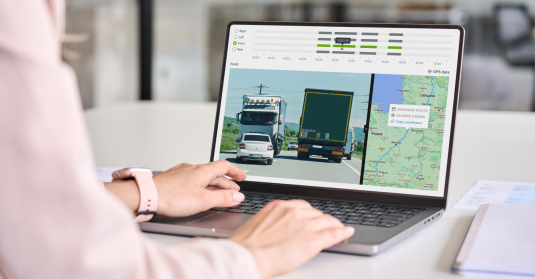
Mapon’s driving behaviour monitoring includes a powerful driver coaching solution. AI-assisted technology helps identify which drivers need attention and prepares personalised feedback based on their actual driving performance – so managers can coach more drivers in less time.
With driver coaching, you can:
-
Automatically review driver performance data
-
Identify key strengths and areas for improvement
-
Generate coaching recommendations in seconds
-
Track each driver’s progress over time
Use Mapon to quantify your progress
What Mapon provides is visibility.
You can see how your drivers are improving – and if they’re not, you know exactly how to help them get there.
Because without data, improving fuel efficiency is like trying to lose weight without a scale – you might be making progress, but you have no objective way to know.
Want to get a better look on how your team is performing? Contact us and see how tracking progress can help your business stay ahead.
 Back to all posts