






 Search
 +371 6727 1803


If you run trucks weighing 7.5 tonnes or more or buses in Ireland, Revenue will refund part of your diesel bill every quarter. On a fleet using 100,000 litres a quarter, that’s up to €12,000 back per quarter in 2026's increased rate, and €7,500 at the standard rate.
Yet many operators leave this money unclaimed, or wait weeks for it because of unclear reporting requirements or difficulty acquiring the necessary data.
In this article, we explain who qualifies, which diesel counts, how much you can get back, and how to make sure your claim goes through first time.
What is the Diesel Rebate Scheme
The Diesel Rebate Scheme (DRS) is a quarterly refund of part of the excise duty (Mineral Oil Tax) you pay on diesel. Revenue runs it to support Irish road transport operators when diesel prices are high.
The idea is simple. When the average diesel price in Ireland is above a set level, you get a few cents back for every qualifying litre your vehicles used. You claim online through ROS (Revenue Online Service), once per quarter.
Who can claim the diesel rebate
You can claim if:
-
you hold a road transport licence (haulage or passenger) that is active for the whole claim period,
-
you have a valid Tax Clearance Certificate,
-
your vehicles are goods vehicles of 7.5 tonnes or more, or buses with at least 9 passenger seats (M2/M3),
-
each vehicle is authorised on your operator licence for the period you're claiming.
Vans, cars and trucks under 7.5 tonnes don't qualify. And if you add a new truck to your licence, allow about 3–4 weeks before it shows up in ROS. You can find the full rules on Revenue's eligibility page.
Which diesel counts (and which doesn't)
Only diesel bought in the Republic of Ireland counts, and only if it was bought in one of two ways: with a Revenue-approved fuel card registered to your business, or as a bulk delivery of at least 2,000 litres per delivery to your base.
So these don't count:
-
diesel paid with cash, a bank card, or on a monthly invoice from a filling station,
-
diesel bought outside the Republic of Ireland, including Northern Ireland,
-
specific fuel products – AdBlue and HVO,
-
fuel on a card or vehicle that wasn't registered in ROS at the time. You can't register it later and claim backwards.
In practice, every cash fill-up is money lost. Make sure drivers always use the approved fuel card.
How much money can you get back
The refund is a fixed amount per litre, set on a sliding scale. If the national average diesel price is €1.23 per litre or less (incl. VAT), there's no refund. At €1.43 or more, you get the maximum.
Irish diesel prices have been above €1.43 for a long time, so operators have been eligible for the maximum.
From January to December 2026, a temporary increase raised the money companies can get back to 12 cents per litre. From 1 January 2027, the maximum goes back to 7.5 cents per litre, unless the Government extends the increase. The exact rate for each quarter is published about 10 days after the quarter ends, on Revenue's rates page.
Here's what 7.5 cents per litre means for a typical fleet each quarter (at 12 cents, calculate 60% more):
-
5 trucks using about 25,000 litres: around €1,875
-
20 trucks using about 100,000 litres: around €7,500
-
100 trucks using about 500,000 litres: around €37,500
Now imagine such savings on a yearly basis.
How to claim, step by step
-
Register for the scheme on ROS with your road transport licence and Tax Clearance Certificate.
-
Register every vehicle and fuel card you want to claim for, before the fuel is bought.
-
Keep records through the quarter: each vehicle's odometer at the start and end, and the litres bought on each fuel card, as well as bulk purchases.
-
Submit your claim after the quarter ends. Wait at least a week, so your fuel card company has sent its data to Revenue.
-
Don't miss the deadline: four months after the quarter ends. For October–December 2026, that's 30 April 2027.
-
Keep an eye on your ROS inbox. If Revenue has questions, your refund is held up until you answer.
Once approved, Revenue pays the refund to your bank account or offsets it against tax you owe.
What you need to report each quarter
The claim is made per vehicle. For each truck or bus, you enter its registration number, its odometer reading at the start and end of the quarter, and the litres of diesel it used, split into fuel card litres and bulk litres. You also list each fuel card with the litres bought on it, and each bulk delivery with the supplier’s licence number, invoice number and delivery date.
Your fuel card totals must match the litres you give for your vehicles. Revenue checks them against data your fuel card company sends directly.
Common mistakes that delay your refund
"Check twice, submit once." – great advice for submitting your claim.
Mileage issues
-
mileage that doesn’t make sense, such as 0 km
-
fuel consumption far too high or too low for the vehicle type
-
odometer typos, with digits swapped or the end reading lower than the start
Fuel issues
-
fuel transactions dated outside the quarter (weekly fuel card statements can cover two quarters)
-
a fuel card that isn’t registered or isn’t recognised by the fuel card company
Vehicle issues
-
vehicles that were sold, taken off the road or not on your licence
Paperwork issues
-
an expired Tax Clearance Certificate, or ROS letters left unanswered
Every inconsistency means delays. Many of them come down to one thing: odometer readings written down by hand, late or from memory.
Simplify DRS with Mapon
While Mapon fleet management platform can't submit the claim for you, it can provide some of the data points that you need to get your money back.
To quickly recap what you need for DRS: a list of vehicles that qualify for the rebate, their odometer numbers at start and end of period, and number of litres filled up, split by purchase type: fuel cards or bulk delivery. Separately, you list each fuel card with its total litres, and each bulk delivery with the supplier’s licence number, invoice number, date and litres. The fuel data by vehicle and by purchase type need to match.
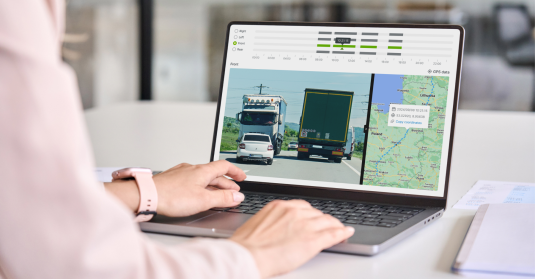
So, Mapon. First and foremost, you'll get odometer readings straight from the relevant vehicles' systems (CAN data). If there's no CAN connection, you can input data manually or use GPS data (which can differ from odometer). All you have to do in the platform is select the right report and the correct period.
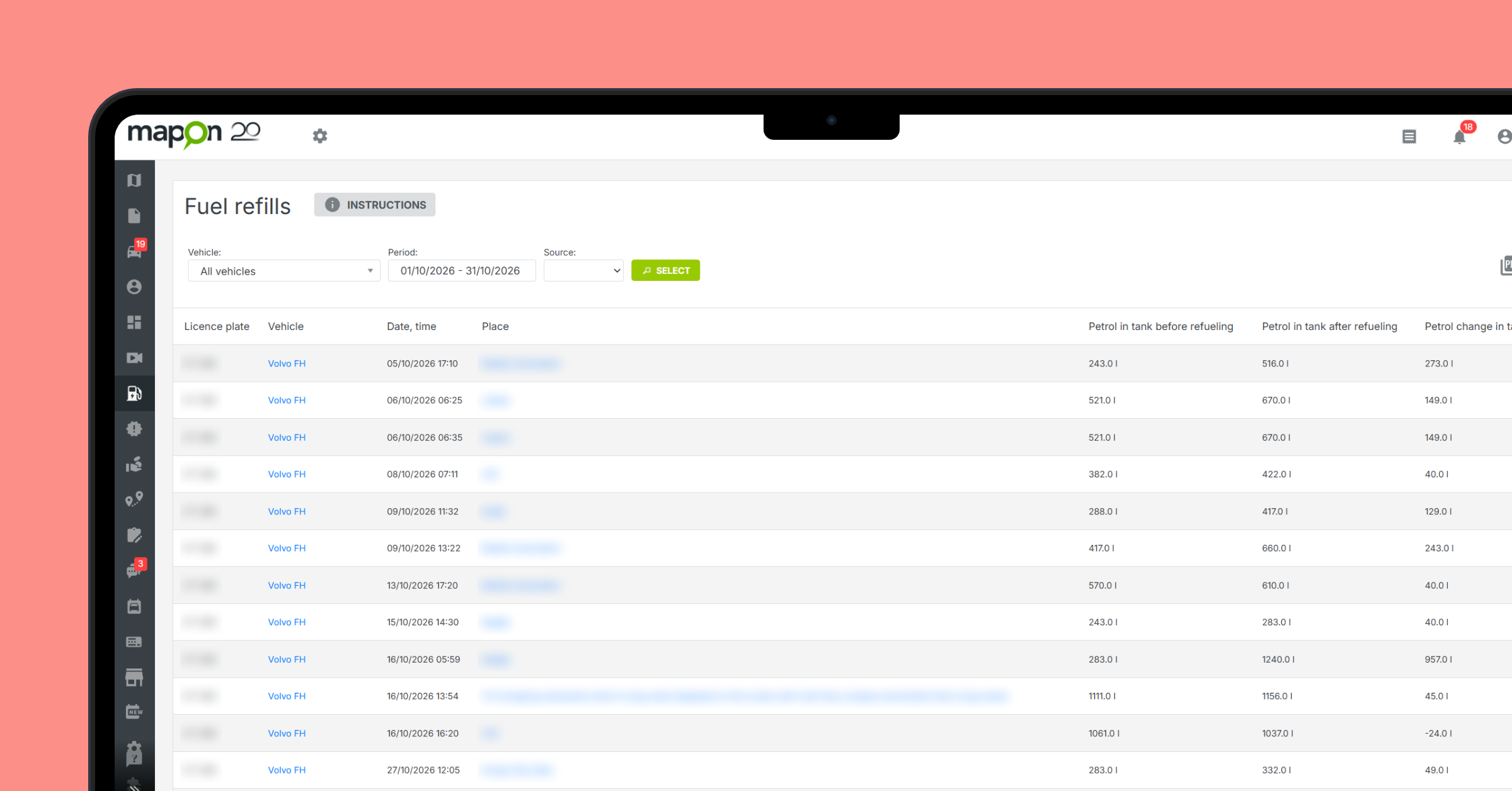
If you're using Circle K fuel cards, another piece of the puzzle falls into place. The Mapon platform can receive refuelling transactions directly from Circle K, including transaction time, card number, litres, and receipt number. If a specific card is used only for a specific vehicle, you can link them.
If you're using a different fuel card or one Circle K card can be used by multiple vehicles, then you can request drivers to log each fill-up in the Mapon Driver app, with a photo of the receipt, the vehicle and the litres. You then have every truck’s refuels in one place, without logging into your fuel card provider’s system. Just make sure purchases that don't qualify for the rebate (such as cash payments) are marked and check the receipt submissions for typos before proceeding.
If your trucks mainly refuel at the base with company tanks (not at petrol stations), and the vehicles have CAN or fuel sensor connections to the Mapon platform, then you can use refuelling information from those sources – time, place, and litres.
What's left is adding data of how much fuel was purchased in bulk and with fuel cards. You can calculate it by first logging all refuelling with the relevant source, then filtering only what's necessary.
Don't leave your diesel rebate unclaimed
To sum up, the Diesel Rebate Scheme gives back money you've already paid. To get it on time, every quarter, you need two things: fuel bought in the right way, and odometer data you can trust.
The Mapon platform helps exactly with that. Try it out now!


 Back to all posts