








 Search
 +371 6727 1803

Fuel is one of the largest cost categories in transport. For many fleets, it accounts for more than 30% of total expenses. It’s also often treated as something driven by market prices, routes, and external conditions.
At Mapon, we can now confidently say that this assumption is not entirely accurate and we have data to prove it.
We've been analysing our client data to understand how much driving style impacts fuel consumption, and the result is bigger than most fleet managers might expect – roughly €2,800 a year in fuel savings per long-haul truck, just by lifting the average driving score by ten points.
This article walks through where that figure comes from, why most fleets never realise it, and what it actually takes to see such savings in your fleet reports.
Driving style, the overlooked cause of fuel spending
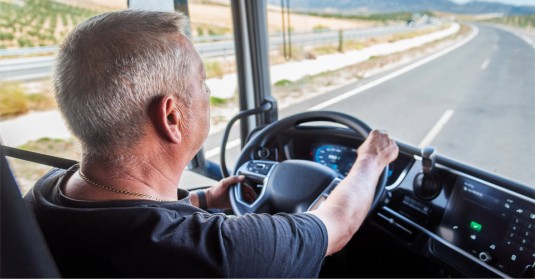
When companies try to reduce fuel costs, they usually focus on route optimisation and vehicle upgrades. Both matter, and both are worth doing. However, neither changes what happens behind the wheel.
Driving behaviour directly affects fuel consumption through:
-
acceleration patterns
-
braking habits
-
idling time
-
speed consistency
These factors are continuous. They influence every driven kilometer. And yet, driving style often gets ignored – not because it's unimportant, but because it's harder to measure and harder to manage than a fuel card or a tyre. We've spent the last few months measuring and researching, and the picture turned out sharper than we expected.
What our research shows
Our analysis covers more than 8K vehicles across a full year, drawing on more than a million daily driving records. The dataset spans every Mapon-supported tracker that captures combination of weight and CAN fuel data, so the findings hold regardless of the hardware running in your fleet.
While this was an observational study, we controlled for vehicle weight and ambient temperature – two external factors that strongly affect fuel consumption. Accounting for these variables gives us strong confidence that the observed fuel savings are primarily linked to driving style, rather than external conditions.
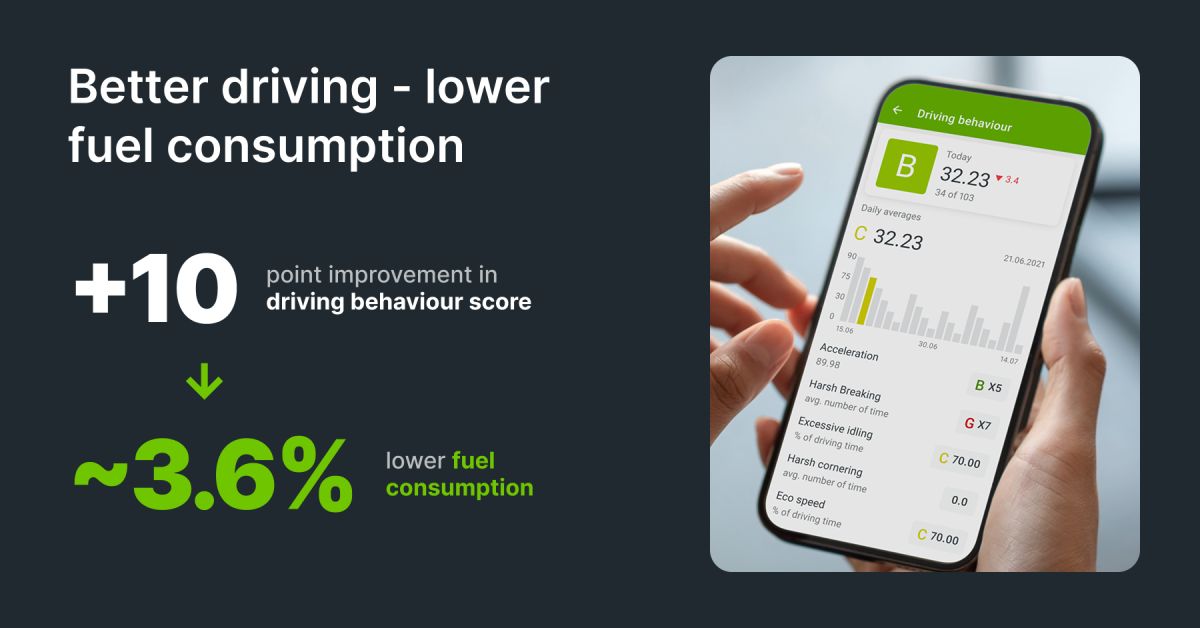
The headline finding: a 10-point improvement in driving behaviour score is associated with roughly 3.6% lower fuel consumption.
What a realistic improvement looks like
For context: the Mapon platform groups drivers into letter grades, with roughly 15 points between each grade. So a single grade jump (C to B, B to A) translates into considerable savings for each vehicle.
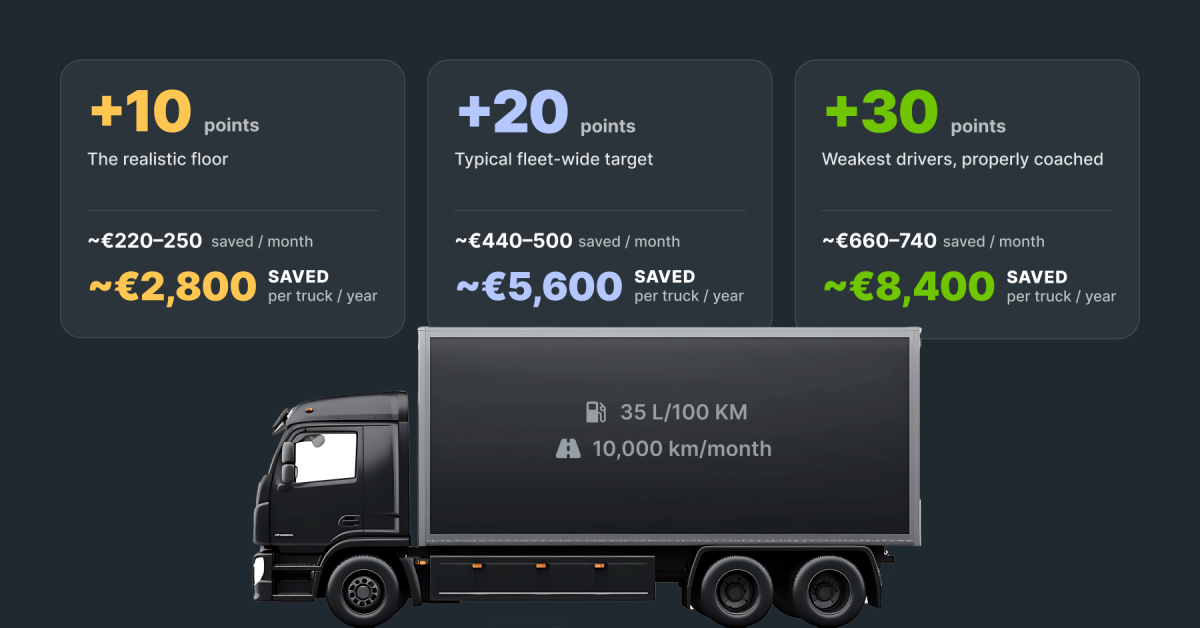
For a typical long-haul truck consuming around 35 L/100 km and doing 10,000 km a month, those saving percentages translate as follows, at EU diesel prices in 2026:
-
+10 points (the realistic floor): ~€220–€250 per month, or ~€2,800 per truck per year
-
+20 points (a typical fleet-wide target): ~€440–€500 per month, or ~€5,600 per truck per year
-
+30 points (what the worst drivers reach when properly coached): ~€660–€740 per month, or ~€8,400 per truck per year
Now scale it across the fleet
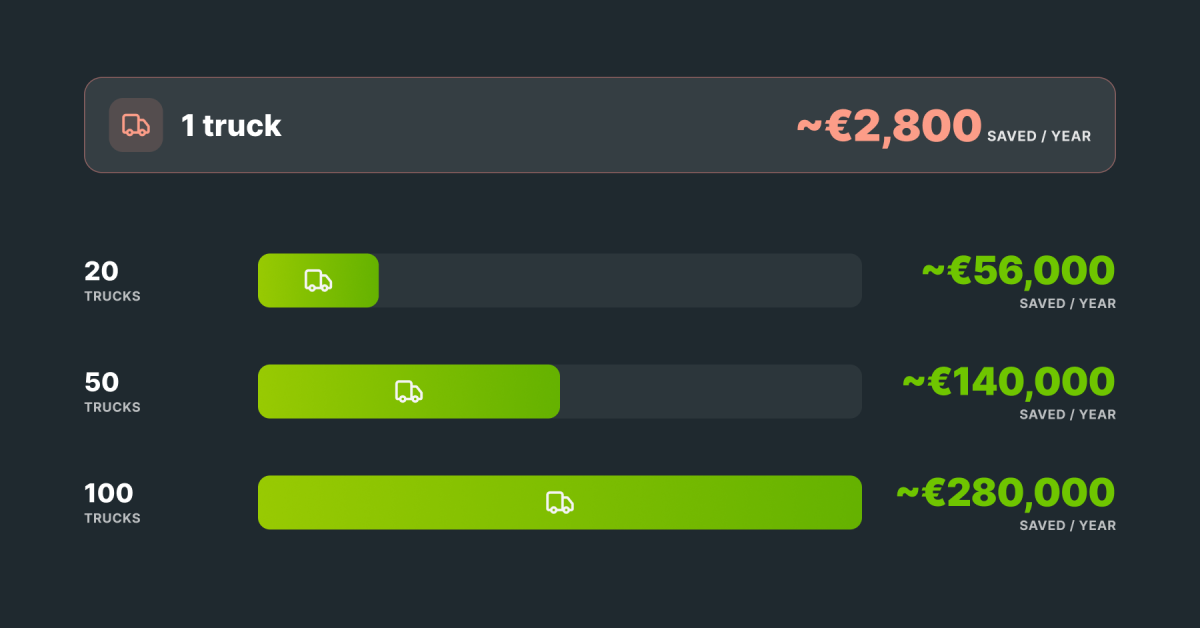
Take a long-haul truck doing 10,000 km a month. A 10-point driving score improvement saves roughly €2,800 per truck per year at current EU diesel prices.
Across a fleet, the picture becomes harder to ignore:
-
20 trucks → ~€56,000 per year
-
50 trucks → ~€140,000 per year
-
100 trucks → ~€280,000 per year
Want a real-life example?
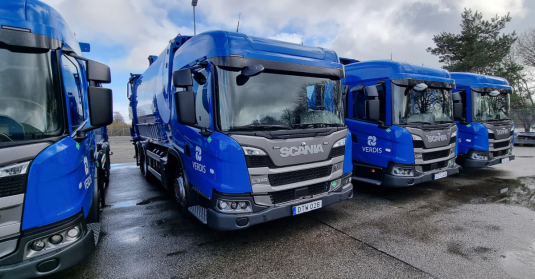
Verdis, a Nordic waste management company with a very different driving profile (short urban routes, frequent stops), achieved a 10% reduction in fuel consumption in their Swedish branch through coaching and consistent follow-up on driving behaviour – roughly €24,900 a month, or nearly €300,000 a year. The ratios may shift with the use case, but the mechanic doesn't: improve the driving, and the fuel bill will fall.
Such savings don't come from one outstanding driver. They come from consistent behaviour that is monitored and promoted across the entire fleet. The harder question is why so few fleets actually get such savings.
Why most fleets never reach these savings
Many companies assume their drivers are efficient enough.
In reality, improvements only become measurable when driving style is tracked consistently. Without a structured approach, inefficiencies remain invisible.
“We already track fuel”Fuel data shows the result but doesn’t show the cause.
Without linking fuel consumption to specific driving patterns, there’s no clear path to improvement.
“We rely on technology”Sensors and fuel monitoring systems are useful for detecting theft and leaks. They don’t change how a vehicle is driven.
Moreover, if you focus on fighting fuel thefts only, you might pay less attention to fuel waste that is gradual and constant. Inefficient driving happens every day, unlike theft, which is occasional. Over time, behaviour-driven losses exceed theft-related losses in most fleets.
“Monitoring is enough”Tracking driving behaviour is necessary but not sufficient. Without feedback and follow-up, drivers return to their usual patterns – not because they aren’t good enough, but simply because changing habits is tricky and requires help.
Data alone doesn't change habits. You need a coaching and reward system behind it, and to save you the work of designing one from scratch, we've put together a few driver coaching examples you can borrow from.
What you should do now
Start by measuring what actually drives fuel consumption in your fleet. Once that's clear, that ~€2,800 per truck saving stops being a hypothetical and turns into a line you can put into next year's budget.
And the case is broader than fuel alone. The same driving habits that burn extra litres also wear out brakes and tyres faster, lift insurance and accident costs, and push up CO2 emissions – which is often not just a sustainability issue, but a compliance one as well. Better driving compounds across all of them.
If you're not yet using Mapon's driving behaviour monitoring, this is a good moment to look at it. Get in touch with our team and we'll walk you through what the data could realistically improve at your fleet!
*Data is based on Mapon's internal research covering 8,652 vehicles and 13,390 driver-vehicle pairs over a full year, drawing on approximately 1.3 million daily driving records. The relationship between driving score and fuel consumption was confirmed across all major Mapon-supported device families.
**Saving figures are estimated based on a long-haul truck consuming around 35 L/100 km and driving 10,000 km per month, at average EU diesel prices in May 2026. Actual results may vary by vehicle type, route profile, and starting score.
 Back to all posts