












 Search
 +371 6727 1803


From 1 July 2026, many light commercial vehicles used in international transport will be subject to tachograph regulations for the first time. In addition to vehicles over 3.5 tonnes, tachographs will also become mandatory for vehicles and vehicle combinations exceeding 2.5 tonnes when used for international transport or cabotage operations.
To help businesses prepare, Mapon recently hosted a webinar together with tachograph experts from LUX, a tachograph workshop and driver training organisation. During the session, the speakers explained which vehicles are affected, what exceptions apply, and how companies can manage tachograph data efficiently.
One of the main messages from the webinar was simple: don't underestimate the preparation required. While the new rules only take effect in July 2026, companies that wait until the last minute may struggle to secure installations and complete the necessary compliance setup on time.
"Everyone is trying to delay the installation. Everyone is trying to get it at the last moment. As it happens, there are some bottlenecks."
– Mareks, LUX tachograph expert
During the session, experts discussed which vehicles will be affected, the most common misconceptions around exemptions, and the practical steps fleet operators should take before July 2026.
Here are the key takeaways from the discussion.
Understanding the key exceptions
While the new regulation expands tachograph requirements, several important exceptions remain.
For example, some vehicles may be exempt if:
-
They are used to transport tools, equipment, or machinery required for the driver's work
-
Driving is not the driver's main activity
-
Operations take place within a defined radius from the company's base
-
The transport is not carried out for hire or reward
However, determining whether an exemption applies is not always straightforward. Fleet operators should carefully assess their specific use case before assuming they are outside the scope of the regulation, as eligibility depends on several factors and the exact nature of the transport operation.
When in doubt, consulting a tachograph specialist is the safest approach.
Tachograph installation: Don't leave it until the last minute
For companies affected by the new rules, tachograph installations should not be treated as a last-minute task. As the July 2026 deadline approaches, increased demand is expected to create bottlenecks across Europe, with workshop capacity, certified technicians, tachograph units, and spare parts all becoming harder to secure.
Industry experts are already seeing this trend. According to tachograph installation specialists, many companies postpone installation until the final months before a regulatory deadline, creating a surge in demand that workshops struggle to accommodate. As a result, businesses that wait too long may face difficulties booking installation appointments before the deadline.
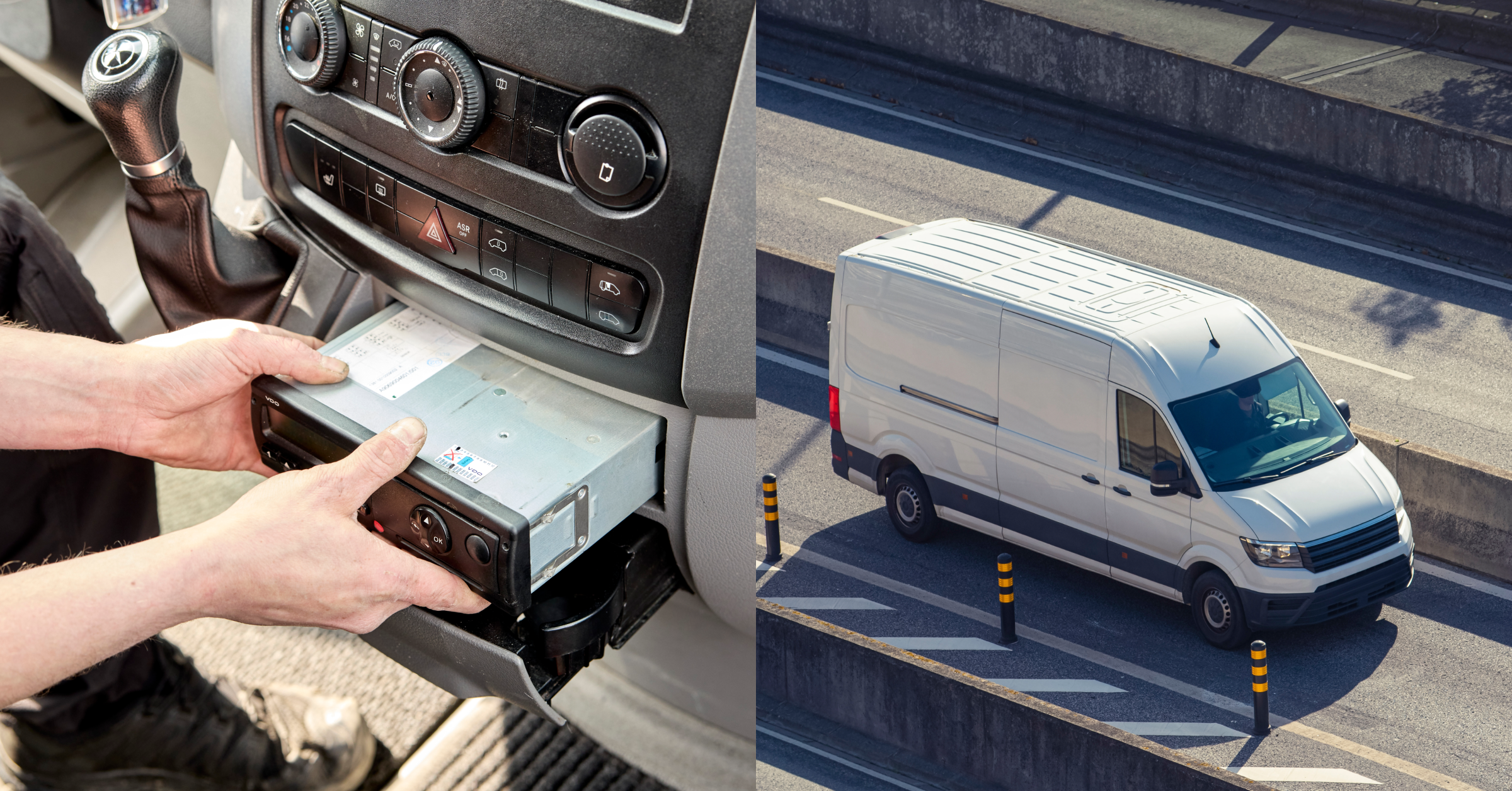
Installation requirements can also vary considerably between vehicles. According to LUX, light commercial vehicles are often more challenging to equip than heavy trucks because manufacturers don't always provide dedicated mounting locations for tachograph components. In some cases, installers need to find alternative ways to connect sensors or fit the tachograph unit, which can increase both installation complexity and workshop time.
"For the vans, they are more difficult to install the tachograph than in trucks because sometimes there is no place for the sensor, sometimes there is no place to fit the tachograph, so we have to find a solution."
– Mareks, LUX tachograph expert
For larger fleets, the challenge goes beyond the installation itself. Every vehicle taken out of service for retrofitting must be scheduled around daily operations. Spreading installations over several months can help reduce downtime, avoid workshop queues, and ensure that vehicles remain available for transport work.
Planning ahead gives companies more flexibility, lowers the risk of operational disruptions, and helps avoid a last-minute rush when workshop availability may be limited.
What happens after the tachograph is installed?
Installing a tachograph is only the first step. Once the device is operational, companies must regularly download and store tachograph data, keep records available for inspections, and ensure compliance with EU driving and rest-time rules.
Drivers must also be able to demonstrate their activities during roadside checks, while fleet operators are responsible for maintaining the required records and monitoring potential infringements. For businesses that have never worked with tachographs before, these ongoing obligations can create a significant administrative burden.
As fleets grow and operations become more complex, managing tachograph data, driver hours, and compliance manually can quickly become time-consuming and increase the risk of errors.
Why downloading tachograph files isn't enough
As Katrīna Melkere from Mapon explained during the webinar, many companies assume compliance ends once the tachograph is installed and data downloads are configured. In reality, that's where the real work begins.
"Most fleets treat the download as the finish line, but it isn't. The download is when the work starts."
– Katrīna Melkere, Mapon
Downloading and storing tachograph data is only part of compliance. The real challenge is understanding what the data reveals about driver behaviour, potential infringements, and compliance risks before they lead to penalties or issues during inspections.
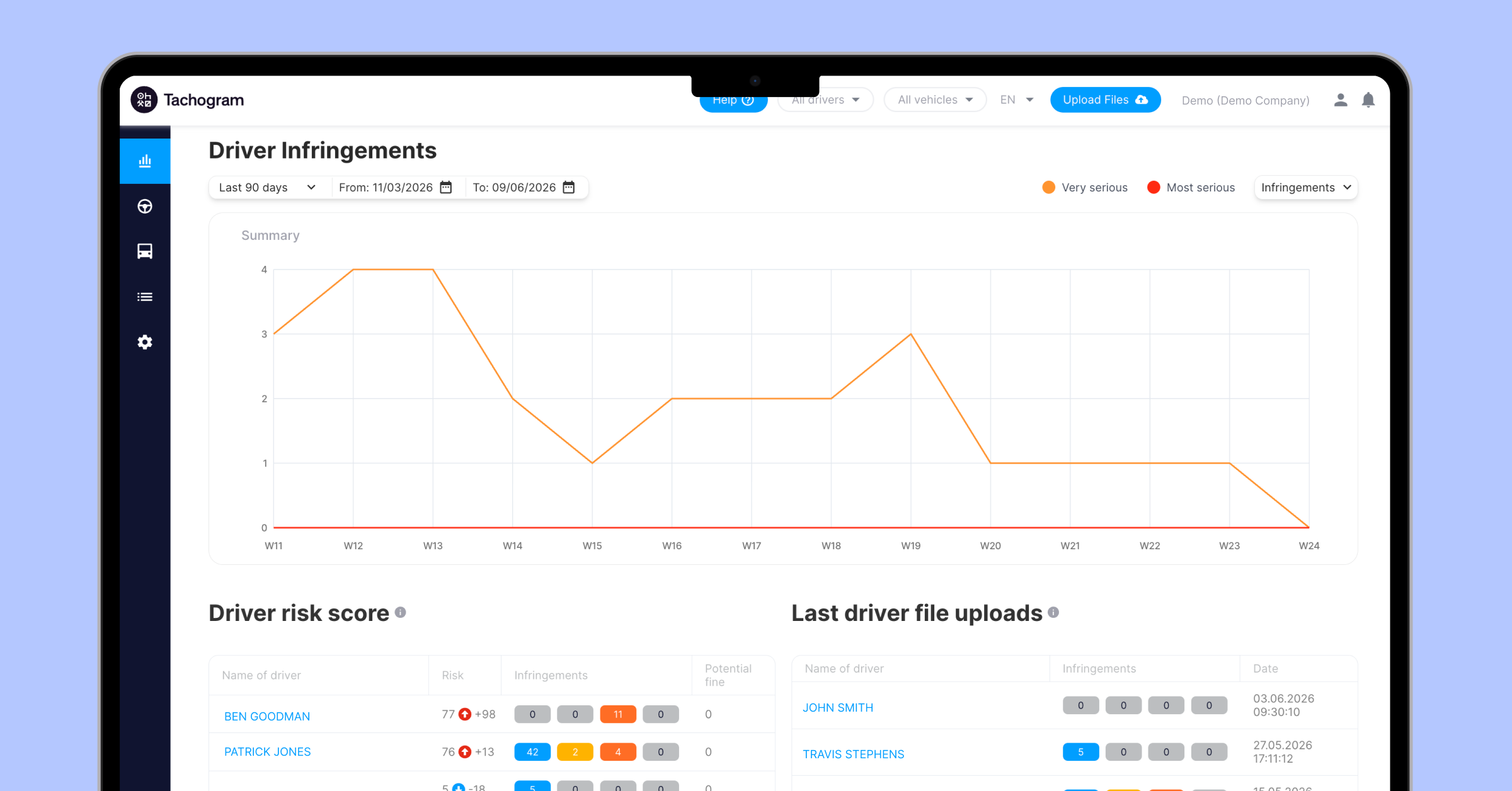
To help fleets manage this process, Mapon offers remote tachograph downloads that automatically collect and store the required data. Combined with Tachogram, a dedicated tachograph management tool, the data is analysed automatically, giving fleet managers visibility into compliance status, infringements, driver risk levels, upcoming deadlines, and other key compliance indicators.
Drivers can also access their own data through the Tachogram mobile app, helping them monitor driving and rest-time information, review warnings, and address potential issues earlier. By giving both drivers and managers access to the same information, compliance becomes easier to manage across the entire fleet.
Check if your fleet is affected
Although July 2026 may seem far away, companies affected by the new rules should start preparing now. Tachograph installation capacity is limited, vehicle retrofits can be more complex than expected, and compliance responsibilities continue long after installation.
For fleets operating vehicles between 2.5 and 3.5 tonnes, preparation should start with a simple question:
Which vehicles in our fleet will actually be affected?
Use our simple tachograph check tool to see whether your vehicles fall under the new rules and start planning your next steps!


 Back to all posts