





 Search
 +371 6727 1803

Imagine this: your truck is involved in a collision during a long-haul trip. From here, two scenarios are possible.
In the first, you wait until the driver returns to base, listen to their explanation, and contact the insurer, who must make a decision with incomplete information based only on the statements of those involved.
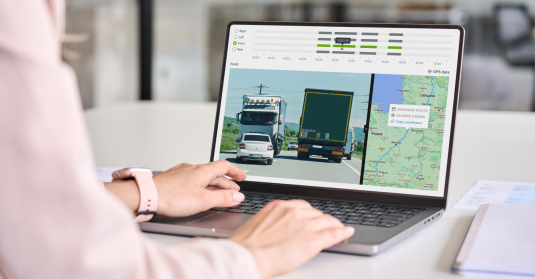
In the second, the accident footage is immediately available in your fleet management platform. You review it, understand who is responsible, and file the insurance claim and plan the repairs on the same day.
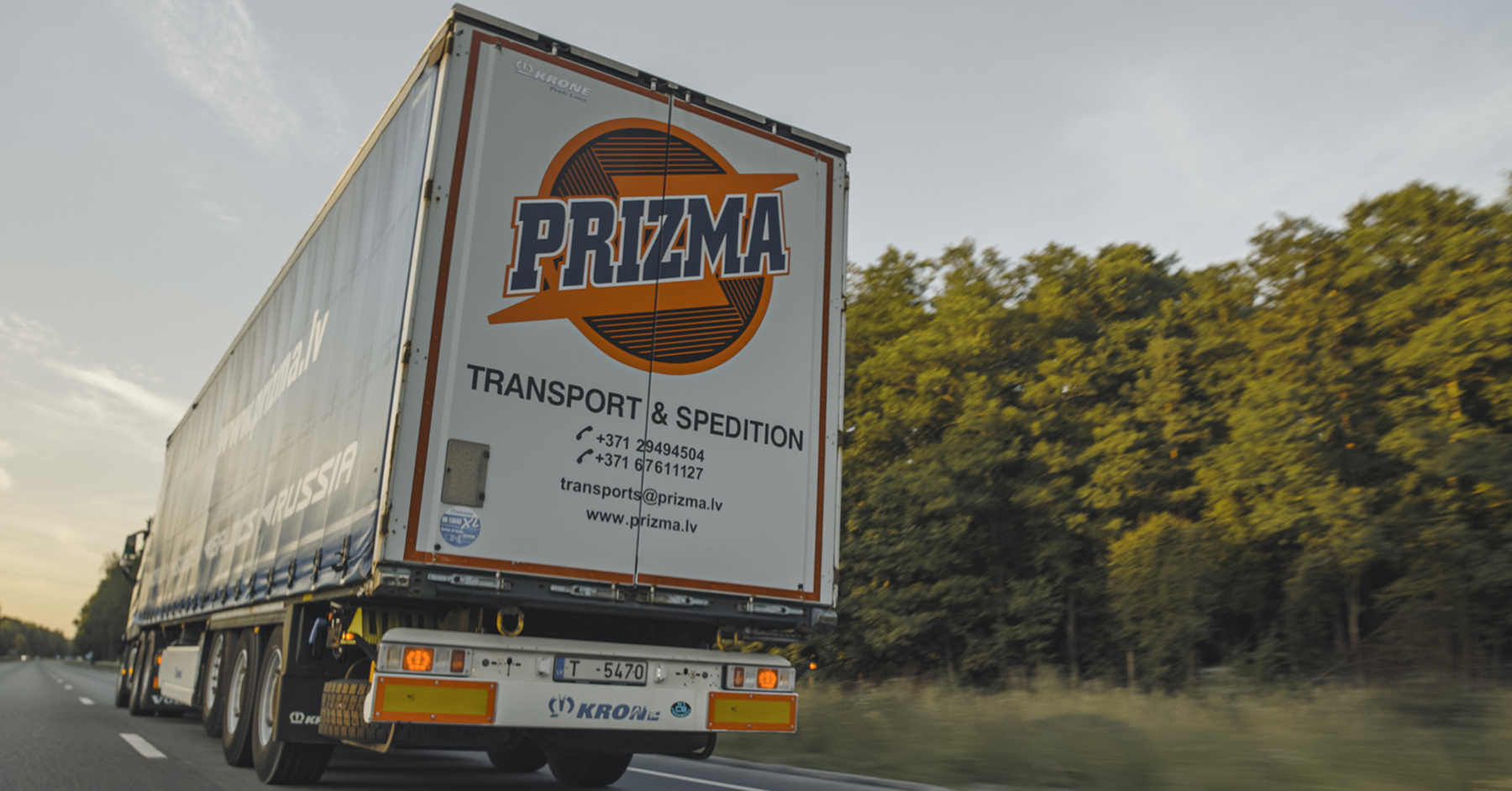
Long-time Mapon client Prizma Logistics chose the second scenario. More than 120 of the company’s vehicles are equipped with Mapon solutions that allow the company to see not only where the vehicle is located, but also what is actually happening on the road.
We spoke with Edgars Lilienfelds, Head of the Repair Department, and Juris Stirniņš, mechanic, to find out why the company decided to move away from simple dash cams and switch to an integrated video telematics system. We also discussed how fleet cameras have changed their day-to-day work and how much they help the company save every day.
From a Cheap Dash Cam to a System You Can Rely On
At first, the company had two opposing views. One side supported simple dash cams that are inexpensive, easy to buy in any electronics store, and seem good enough at first glance. The other side believed that such devices wouldn’t meet the needs of a professional fleet.
“At first everything looks fine. But when a truck returns from a trip with damage and there’s no video, that’s when you realise a basic device simply isn’t enough,” says Edgars.
In practice, the problems kept repeating. Cameras that required manual activation didn’t always work. Drivers sometimes forgot to insert or replace memory cards. Recordings were lost, and new footage overwrote previous incidents. Even though vehicles were technically equipped with cameras, it was often impossible to prove what had actually happened after an accident.
The decision to switch to Mapon fleet camera systems came gradually, as the company saw their advantages in real-life situations.
Videos recorded by Mapon cameras are available directly in the fleet management platform. This means recordings cannot be hidden or deleted, and they aren’t affected by human error or damaged memory cards.
Accidents Happen Regularly
With more than 150 vehicles in operation, Prizma Logistics is used to the realities of road traffic. Various incidents are unavoidable and occur quite often.
Based on the company’s experience, more serious accidents happen every couple of months. Smaller incidents, such as mirror collisions, hitting obstacles, or minor manoeuvring damage, can happen almost every week.
The cost of accidents in a heavy vehicle fleet can vary dramatically.
“It might be €200 for a part. It might be €900 for a single mirror. Or €50,000 for a serious accident. We’ve also had cases where the total cost exceeded €100,000,” says Juris.
But repairing the vehicle is only part of the cost. Companies also have to account for:
-
vehicle downtime
-
towing or recovery
-
lost revenue
-
driver travel expenses
-
possible penalties for delayed deliveries
“Even without counting the repair itself, one day of downtime can cost us at least €1,000.
And the farther from home the truck is, the more expensive it becomes,” adds Juris.
Making Decisions While the Truck Is Still On the Road
Today, Prizma Logistics uses video telematics together with GPS tracking and tachograph data analysis. The logistics team monitors routes, while the technical team investigates accidents and vehicle damage.
The main advantage of cameras is speed.
“The driver hasn’t even returned home yet, but we already know what happened. We can file the insurance claim, prepare spare parts, and plan the repair,” says Edgars.
Speed and efficient handling have a direct impact on downtime. The less time a vehicle spends standing still, waiting for decisions or repairs to begin, the faster it gets back on the road and continues generating revenue.
If the situation is clear the same day, the company can immediately file the insurance claim, order spare parts, and adjust routes. This prevents a single incident from turning into a chain reaction with multiple delayed deliveries.
It also affects competitiveness. While one company waits for the driver to return to base, submit an explanation, and only then start analysing the situation, another has already reviewed the footage, assessed the circumstances, and made a decision. Delays are reduced to a minimum.
The ability to deal with traffic incidents quickly also creates a strategic advantage. Management doesn’t have to spend time guessing or debating what might have happened. Decisions are based on facts, not assumptions. This frees up resources for other business priorities such as route optimisation, cost planning, and attracting new clients.
The less time spent putting out fires, the more time remains for growth.
The Attitude Has Changed
When the company introduced GPS tracking in 2009, drivers were sceptical at first.
“To be honest, the drivers weren’t very happy back then. It felt like they were being monitored,” recall the representatives of Prizma Logistics.
Over time, that attitude changed. Today, some drivers have access to their own working time data, and the system helps them keep track of driving and rest schedules.
Cameras are now seen as protection rather than control.
The company also makes a conscious decision not to install cameras inside the cabin.
“That’s the driver’s space. We record the road and surroundings, not the person inside the cab,” emphasises Prizma Logistics.
Long-Term Partnership Since 2009
Prizma Logistics is one of Mapon’s early clients. The partnership began in 2009, when fleet management looked very different from what it does today. Smartphones were not yet part of everyday work, mobile navigation wasn’t standard, and communication with drivers often happened by phone or text message.
“When the option to see vehicles on a map and send messages through the system appeared, it was a big advantage. We could see where the truck was and react faster,” recalls Juris.
Today, GPS tracking, automatic tachograph data downloads, and video all work together in one platform. This means that all vehicle-related information is available in a single place: routes, working hours, driving behaviour, and specific situations on the road.
There’s no need to switch between multiple systems or collect data manually, which saves valuable time during the workday.
A View From the Driver’s Seat
With 31 years of experience in the industry, Prizma Logistics knows that in logistics with a large fleet, the question is not whether accidents will happen.
The real question is how quickly the company can understand what actually happened and how accurately responsibility can be determined. Every delayed decision means additional costs, stress for the team, and potential risks to client relationships.
Video telematics make it possible to see the situation from the driver’s perspective. You can observe the road conditions, the traffic flow, and the manoeuvre made just seconds before the collision. This helps evaluate the context, not just the outcome. Often, those few seconds determine whether the driver, another road user, or unpredictable circumstances were responsible.
“If there’s a recording, everything becomes clear. And we can move forward,” says Edgars.
What GPS Can’t Show, Video Can
GPS shows where a vehicle is. Video telematics show what actually happens on the road.
For a company handling hundreds of transports each month, this difference matters. It means faster decisions, smaller losses, and clarity in situations that would otherwise remain uncertain.
Want to see how your fleet operates in real-life situations?
Get in touch with the Mapon team to find a video solution that helps you make better decisions and reduce downtime!
 Back to all posts