






 Search
 +371 6727 1803

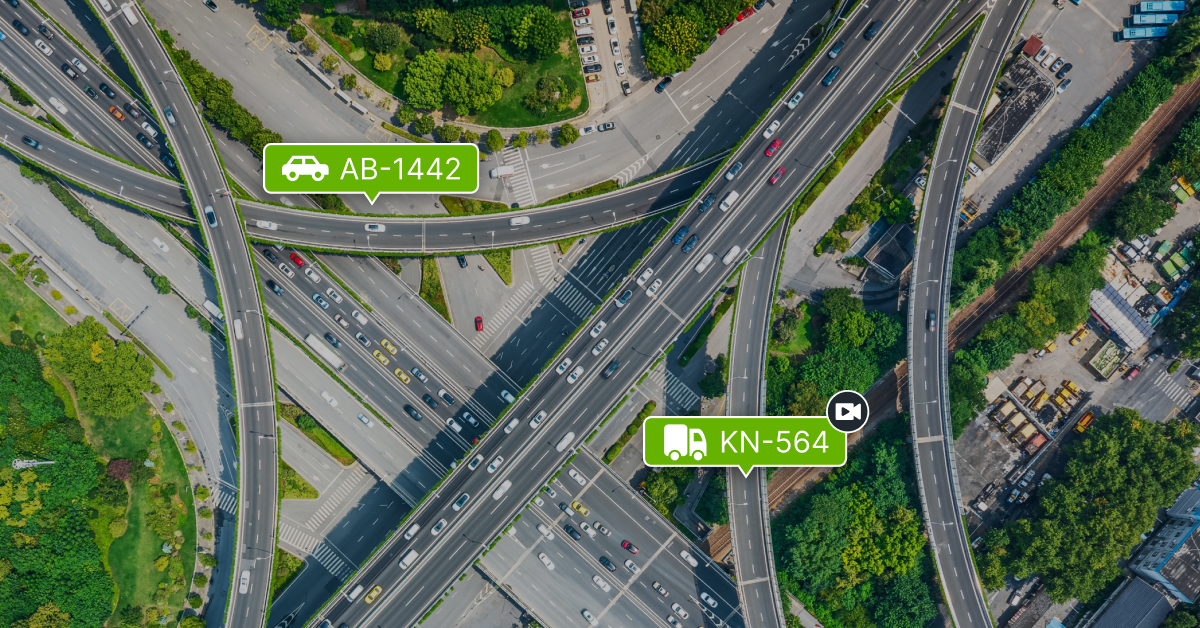
Many companies are convinced that if their vehicles appear on an online map, their fleet is already digitalised. In practice, that’s only the first step at best, and sometimes just an illusion of control.
GPS tracking does solve a basic task – it shows where the vehicle is. But for many companies, that’s often where it ends. After that, manual management begins: dispatchers call drivers, ask why the route changed, check whether the cargo has arrived. There is control, but it depends on people, not on the system.
As a result, the logic of manual work itself doesn’t change. Instead of building digital processes, companies simply add an online map to the existing workflows. It helps see the situation, but not manage it.
If you look at the bigger picture, it becomes clear that companies fall into two types.
Companies that move forward
Some companies don’t wait for their processes to start falling apart. They look in advance at what can be improved, follow new technologies, and think about how to apply them in their work.
For them, it’s important not just to implement a tool, but to understand how it will affect daily processes and where it will remove manual work.
The initiative almost always comes from the top. If management is ready for change, implementation goes more smoothly, because there’s no need to keep proving why it’s necessary.
There aren’t many such companies, but they are the ones setting the standard for the market and gradually pushing out less advanced competitors.
“The driver hasn’t even returned to base yet, and we already know what happened. We can file an insurance claim, prepare spare parts, and schedule the repair” – Prizma Logistics
Companies where “everything already works fine”
The second group is most of the remaining companies.
They have processes in place, tasks get done, clients don’t complain, so everything seems fine. These companies usually rely on the same familiar set of tools: Excel, Google Docs, calls, and messaging apps.
They may have GPS, but it exists simply as an online map that someone checks from time to time. Everything else depends on people. Automation is either minimal or limited to specific areas.
When the topic of full automation comes up, the answer is usually the same: “Everything already works as it is.”
And that’s true – it works, but at the cost of manual oversight. Dispatchers spend time checking things, drivers get calls to clarify details, and mistakes are corrected along the way. The problem is that the real losses in these non-digitalised processes aren’t always obvious.
What manual processes are hiding
If you take a closer look at these companies, it quickly becomes clear: the same situations repeat day after day:
-
the driver goes off route;
-
delays occur;
-
the dispatcher has to call and check what’s happening;
-
control is maintained through constant map monitoring
-
fuel costs don’t match actual consumption
A typical scenario: the company transports the same cargo along the same route every time. It would seem like the perfect case for automation: set the points, configure alerts, connect fuel receipt integrations with petrol stations, and everything will run on its own.
But instead, the dispatcher simply watches the screen, manually checks whether the vehicle has arrived, and gets into disputes over fuel consumption without any evidence.
That’s the essence of manual processes: where a system could be doing the work, a person is doing it instead, but slower.
These processes don’t scale and create hidden costs – when the number of trips increases, there aren’t enough people, while the processes still depend on manual control.
“If we had switched to Mapon’s solution a year earlier, during the transition to second-generation smart tachographs, we wouldn’t have had to update the reader software and replace expiring company cards.” – Paula-Š
Why companies don’t change their approach
Even if the problems are obvious from the outside, inside the company they are rarely seen as critical.
Largely because the business is still running: money is coming in, clients aren’t leaving. There are unnecessary time costs, but they are seen as background noise that everyone is used to.
On top of that, the processes are already in place. They may not be ideal, but they are familiar: Excel, documents, an internal way of working. Any changes in such a system look like a risk of breaking the usual order.
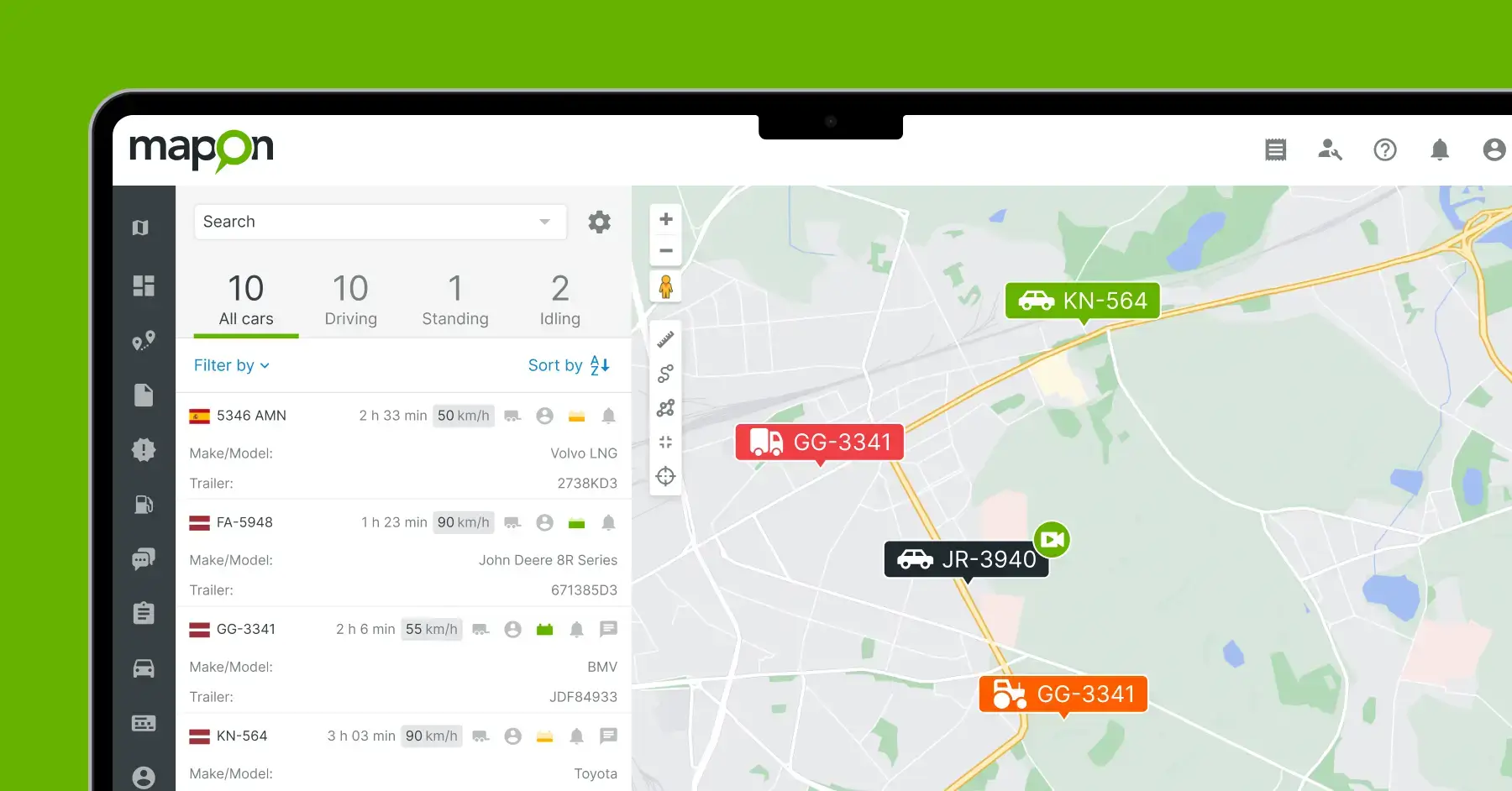
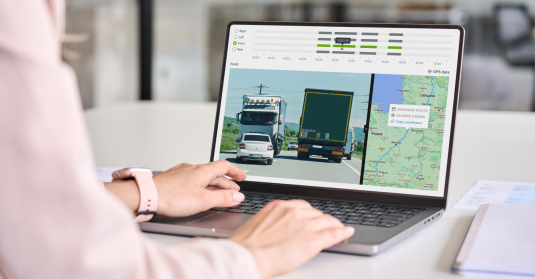
Online map – the most visited section of the Mapon platform
GPS tracking is only the beginning
We often see in transport companies is limiting digitalisation to the most basic function, namely GPS tracking. At the same time, even the basic Mapon subscription plan includes many other useful features: geofences, simple route planning, and apps for drivers and managers.
In many cases, the problem isn’t the lack of digital solutions. The problem is that the functionality already available isn’t being used.
Companies don’t:
-
create objects;
-
set up alerts;
-
use reports;
-
automate regular processes.
This means that the main potential for digital growth and workflow optimisation lies not in new solutions, but in using the existing ones properly.
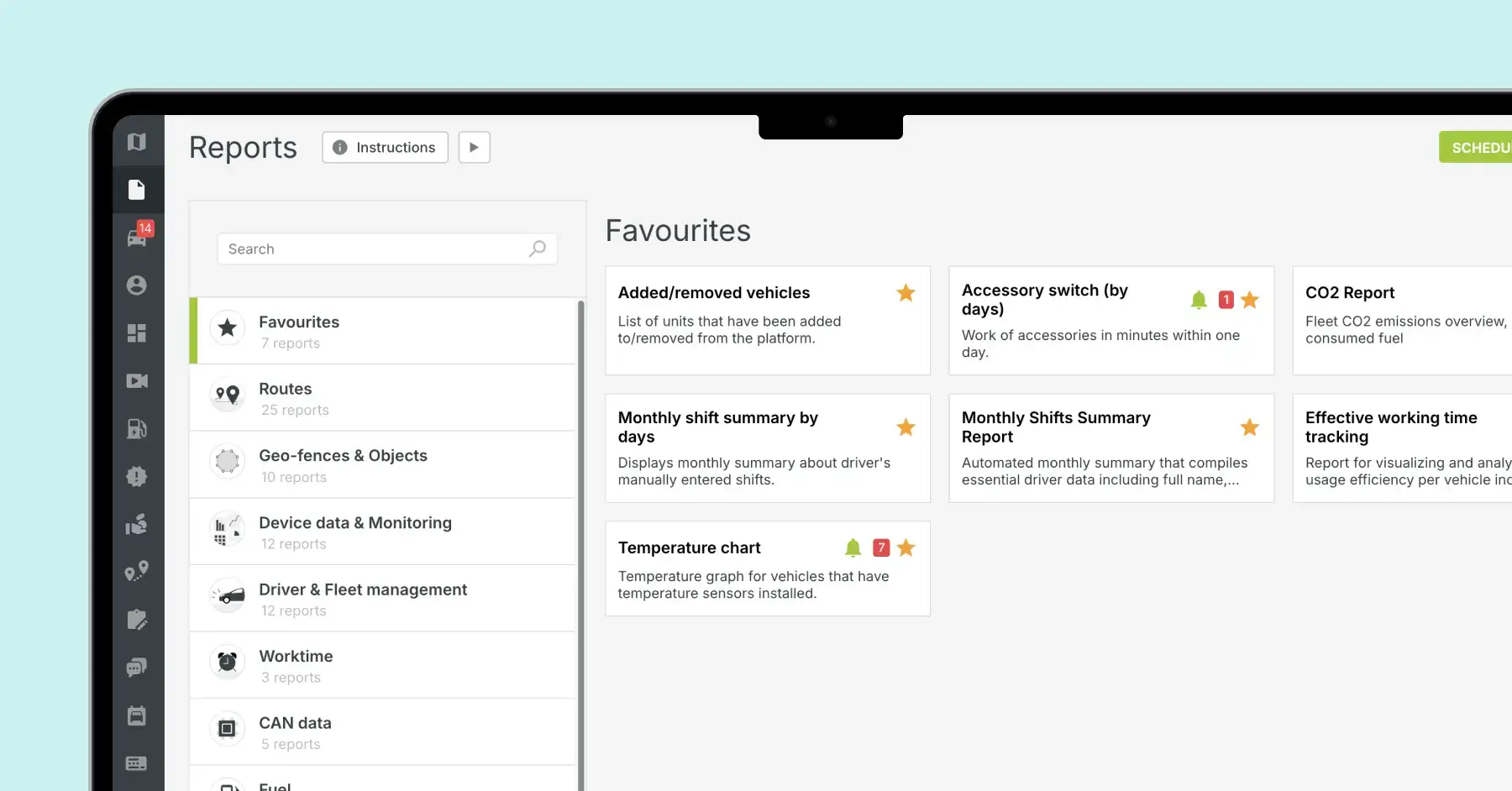
Reports – the second most visited section of the Mapon platform
What can really change fleet operations
The Mapon fleet management system offers many digital approaches that deliver quick results.
Automation instead of manual controlThe system should notify you about events, not require constant monitoring.
Alerts help the dispatcher who spends the whole workday constantly checking the online map just to see if the vehicle has arrived. The hours you save can be spent on more complex tasks, for example, planning optimal routes.
Data instead of assumptionsReports and analytics make it possible to make decisions based on facts.
Accurate fuel consumption data helps understand whether there have been fuel thefts or private refuelling paid for with a company fuel card.
Digital inspections as part of the systemVehicle inspections become significantly more effective when they are integrated into a digital workflow.
Instead of being handled on paper or in separate tools, inspection data is recorded in real time and immediately available across the platform. This removes the need for manual follow-ups and reduces the risk of missed or delayed issues. Instead of being a routine task, inspections become a reliable data source that supports faster decisions and better control over fleet condition.
Transparent processes instead of blind trustTrusting a driver doesn’t eliminate the need for transparent processes.
Communication and working time tracking through the Mapon Driver app ensures full transparency and fairness appreciated by both employees and employers.
And these are just a few ways to use our platform to digitise your fleet – the full list includes more than 15 solutions!
“Before, I had to go to sites and observe the work in person. Now I can log in to the platform, spend 10 minutes looking at one driver, 10 minutes at another, and save several hours a day.” – Keskkonnahooldus
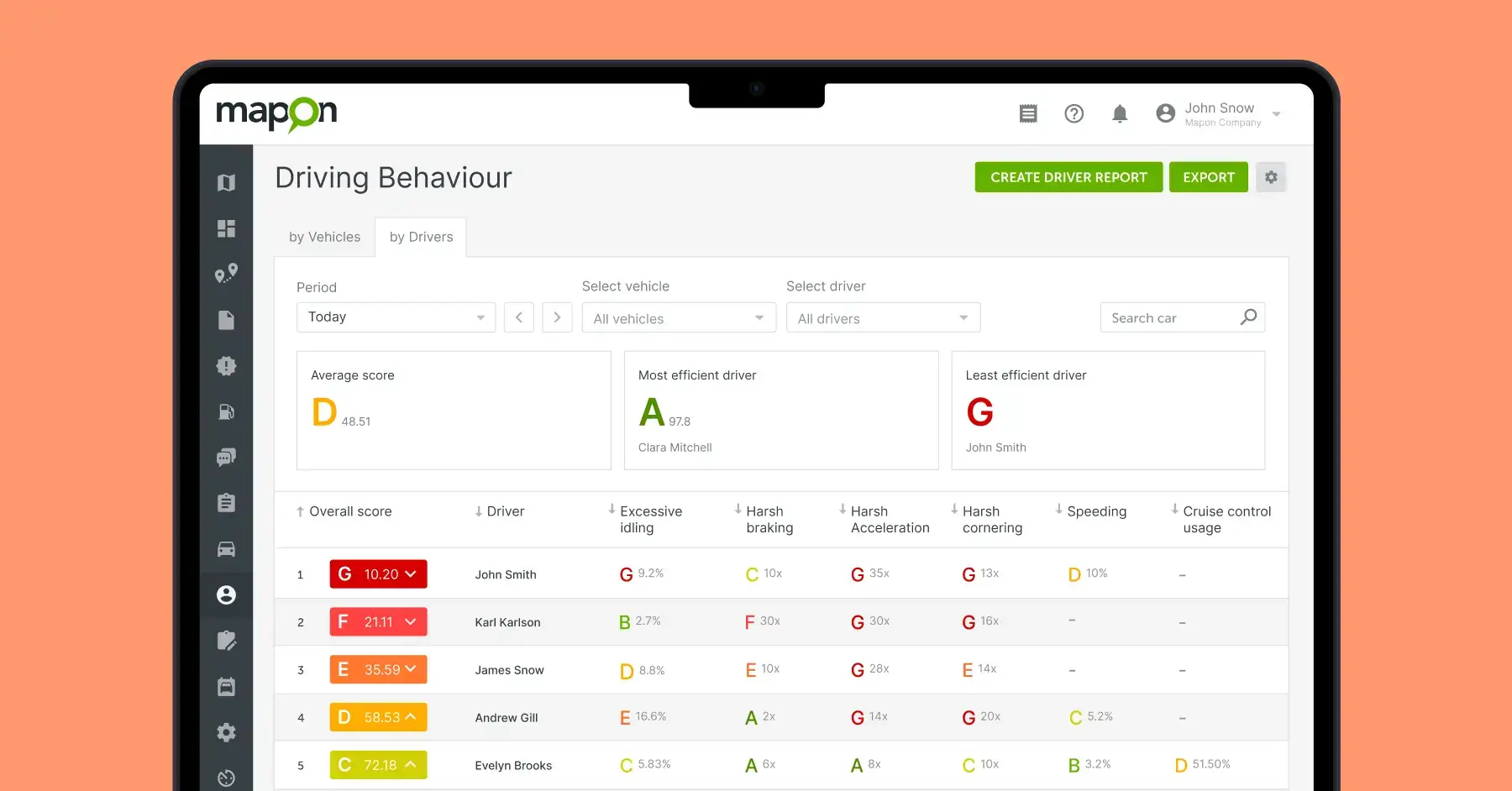
Driver management – among the top 5 most visited sections of the Mapon platform
The key stage is onboarding
Any digital system requires employee training, and the fleet management platform is no exception.
The problem is that no one learns all the functionality in a single meeting, and that applies to any system.
That’s why proper onboarding is always spread out over time. Employee training should happen step by step:
-
first, the basic functions;
-
then alerts;
-
then reports and analytics.
Repetition and working through specific cases are also important.
Without that, fleet digitalisation always ends the same way – the platform has every possible feature and analytics tool available, while dispatchers and managers just look at the live map.
Different roles, different tasks
Another important point is that a “fleet management platform user” is often not just one person.
The same system covers different tasks. Top management looks at the numbers and the overall picture. The dispatcher focuses on completing specific tasks. The planner looks at routes and workload.
In a small company, this may be one person doing everything. In a large company, it’s several roles with different tasks and priorities.
If this isn’t taken into account, the training falls apart. Everyone is shown everything at once, and in the end no one understands which functions are relevant to their work.
What digitalisation really means
It all comes down to something quite simple.
Successful fleet digitalisation means taking the right approach to processes, not having a certain set of features. Here’s the most basic checklist:
-
routine tasks are automated instead of being done manually.
-
decisions are made not “based on gut feeling”, but on data.
-
there’s no need to constantly monitor and double-check because the processes are already set up.
Companies that reach this level start operating differently. They have less manual control, fewer unexpected situations, and more predictability.
Everyone else stays at the same pre-digital level, just with an online map on a computer screen.
***
If a lot in your company still depends on manual control, that’s normal. Almost every business goes through this stage.
The question is how manageable those manual processes are and what will happen to them as the business grows.
If you want to understand the situation better and put things in order, let’s start with a conversation! Contact our team, and we’ll show you where time is being lost and how your fleet can be digitised simply and effectively.
 Back to all posts


_mobile.webp_mobile.webp)